The Big Picture: Inside the Credit Squall
Boat dealers and buyers face the same problem-financing just isn't that easy to get.
February 6, 2009

Boats.com columnist Matt Trulio has written about powerboats and powerboating for 14 years.
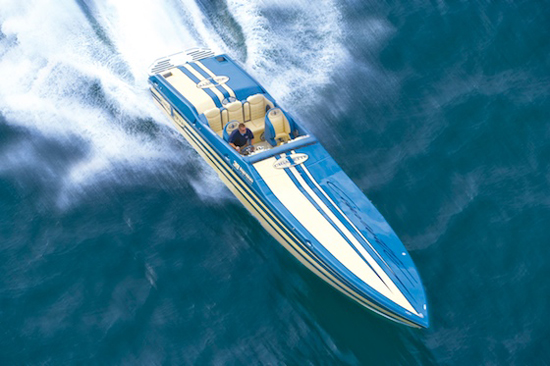
Bob Christie is-generally speaking-one of your cooler customers. Unless you say something awful about his wife, daughters or close friends, Christie, the owner of Typhoon Service Center, a powerboat service operation in Toms River, N.J., isn't likely to get riled. You can ride with him in his 44 Marine Technology, Inc., catamaran at 150 mph and he'll yapp away at you as if you were sitting in a quiet hotel bar. He's laid back in good times, and calm under fire.
But ask him about the state of consumer and dealer financing in the powerboat world and he struggles for composure.
"It's ugly out there," says Christie, who was a dealer for Donzi, Baja and Angler until he stopped selling boats at the end of 2007. "The days of people spending $50,000 to $100,000 for a recreational vehicle on the water-well, people are more worried about having a job than spending that kind of money."
Having scraped a C+ out of Economics 101 in college only because the final was an essay test and I could write my way out of (almost) anything, I will not offer my perspective on the U.S. and world economies. (OK, they suck, at least that's my take based on what I read in the Los Angeles Times this morning.) But I can tell you what Christie and others have told me about what's been going on in the powerboat business.
Step into many boat dealerships (certain chain dealerships and builder-owned dealerships excepted) and what you see is "floor-planned" inventory. Replace the words "floor-planned" with the word "financed" and you get a clearer picture of what you're looking at. The dealer borrowed money from a bank to buy those boats from the builder. Most builders require dealers to buy a minimum amount of new models each year to still qualify as dealers.
Of course, the banks charge interest, that's how they make money on "floor-planning." Your goal, as a dealer, is to sell those boats as quickly as possible so you can pay off the bank and make a profit. Some builders incorporate up to six months of interest into the wholesale cost of the boat. Greatly simplified, the faster you sell, the better off you are.
But what happens when the economy slows and boats sit? What happens when you take in trades, used boats, as part of the down payment on new boats, and those trades sit too? What happens when your inventory keeps growing, the economy keeps slowing and consumer credit becomes a lot harder to get?
"In 2007, we 'sold' one boat 14 times," said Christie. "Thirteen times the deal fell through because the buyer couldn't get credit, and all 13 of those buyers had credit scores above 700. A year earlier, they all would have qualified. In 2006, anyone could get financed. In 2007, we had 50 to 55 people with credit scores above 750 turned down for financing."
Now, it would be unfair to say that consumer credit has completely "dried up." But it's fair to say it's much tougher to get, and that seeing this many banks have abandoned the floor-planning lending business or raised their fees and interest rates to a point where they make it tough for dealers to survive.
"If you can find a bank that's going to loan money you're not necessarily going to get a very good deal," says Christie. "The cost of money is high right now."
This lovely state of affairs has translated to-you guessed it-dealers going out of business and their inventory going to other dealers or, worse, back to the manufacturers. Boat-building, at least on the production (assembly-line-built) side depends on consistent volume to be profitable. Returned inventory combined with sharply reduced demand for new inventory translates to plant shut-downs. And there were more than a few of those near the end of 2008.
"It's not the boating industry's fault, it's the economy," says Christie. "If you walked into a Harley dealer five years ago you couldn't buy one. Now you walk in and five guys jump all over you."
Depressed yet? Don't be. Recreational powerboats will not go the way of the dinosaur (although as fossil-fuel burners we should be grateful to the dinosaurs for going the way they did). The industry will not disappear. But it will change and-inarguably-get smaller. Your brand choices will become fewer and farther between. And you might have to wait a few months from the time you buy your boat to the time it's actually built.
"The high-end custom builders are at an advantage now," says Christie. "They get an order for a boat, and then they build it. The big production builders, I'm not sure what they're going to have to do, but they may have to become a lot more like custom builders."
Regardless of what you buy, if you have cash now you're positioned to get the boat deal of your life.
"If you're a boat buyer with cash, you're king," says Christie. "I'm a distributor for MTI now and I'll be working the Miami Boat Show next week," says Christie. "My first question will be, 'Do you have a trade-in?' My second question will be, 'Do you have cash?' I'll let you know how it goes."
I'll let all of you know, too.